
Direct answer
What should I know about Buildium vs AppFolio?
Buildium vs AppFolio helps rental owners make a clearer decision about leasing, tenant screening, cash flow, risk and long-term property performance. The best answer depends on the property, local demand, rent readiness, owner goals, legal requirements and the cost of vacancy or mistakes.
Key points before you decide
- Start with the owner objective: stable income, lower vacancy, stronger screening, better systems or a decision to keep or sell.
- Measure the issue in dollars and time, including vacancy, repairs, leasing delays, compliance risk and management effort.
- Use a documented process so tenant decisions, leasing steps and owner expectations are consistent.
Buildium vs AppFolio
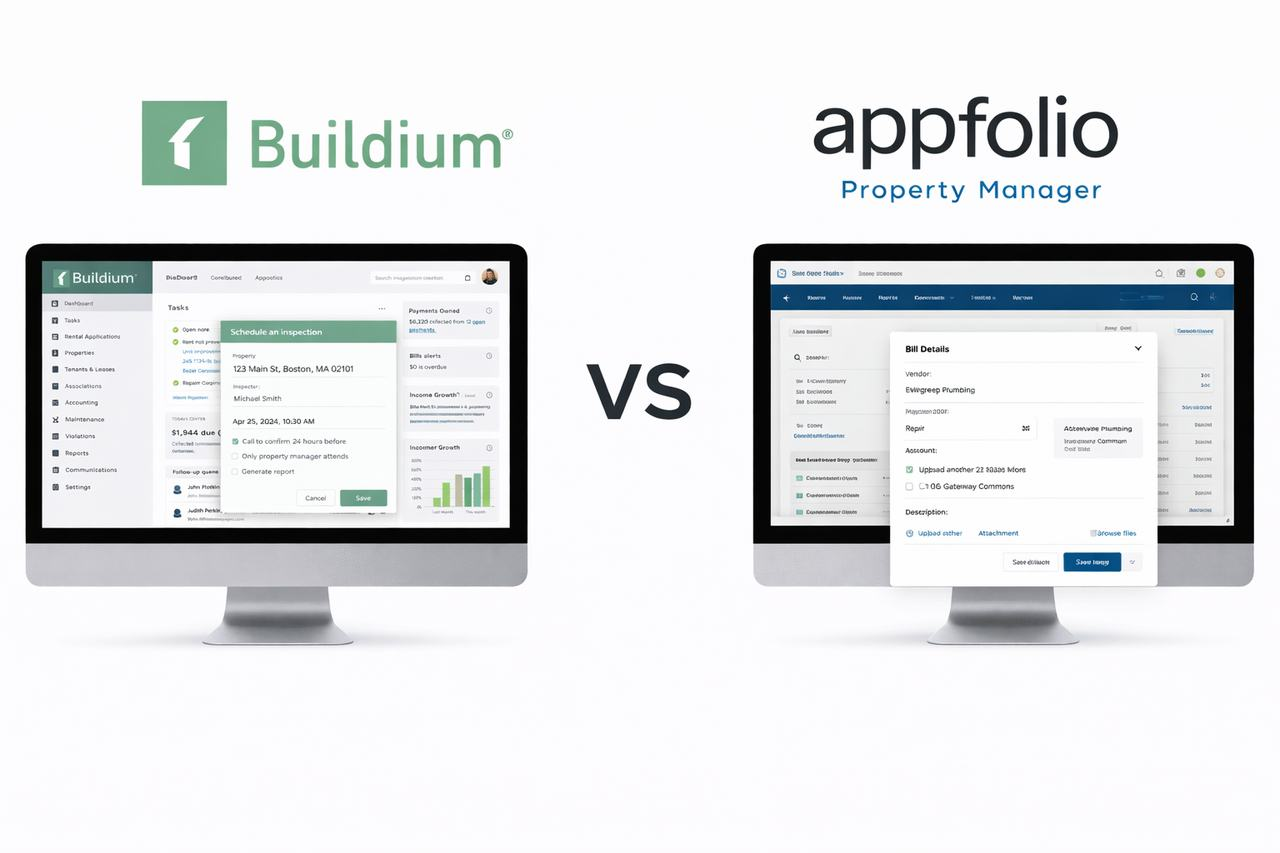
A direct comparison of Buildium and AppFolio—two industry-leading property management software platforms—to help landlords and managers decide which fits their needs based on features, scalability, usability, and support.
Side-by-side feature comparison
| Feature | Buildium | AppFolio |
|---|---|---|
| Accounting & financials | Comprehensive accounting suite | Highly robust, scalable accounting and reporting |
| Maintenance management | Strong maintenance tracking and workflows | Advanced maintenance tools with mobile support |
| Mobile capability | Good mobile interface | Market leading mobile apps |
| Ease of use | Modern UI, moderate learning curve | Feature-rich, steeper learning curve |
| Third-party integrations | Good core integrations | Extensive ecosystem and marketplace |
| Support & training | Helpful support and knowledge base | Structured onboarding and extensive training |
Feature insights
Accounting & Reporting
Both platforms offer strong accounting capabilities. Buildium provides a comprehensive suite suitable for most portfolios, while AppFolio’s accounting is designed to scale with large and complex operations.
Maintenance & Operations
Maintenance workflows are robust on both systems. AppFolio’s mobile-first operational tools give field teams an edge, while Buildium’s tracking and vendor communication tools remain effective for day-to-day use.
Mobile Experience
AppFolio is frequently recognized for its mobile applications tailored to on-the-go property management. Buildium’s mobile offerings are solid but generally viewed as less advanced in field-centric functionality.
Ease of Use
Buildium strikes a balance between modern design and accessibility. AppFolio’s deeper feature set may require more initial training, particularly for smaller teams without dedicated software admins.
Integrations & Ecosystem
AppFolio’s partner marketplace offers a broader array of third-party integrations. Buildium covers the core tools landlords need, and its ecosystem continues to grow.
Best fit scenarios
- Mid-size portfolios: Buildium’s balance of features and usability often makes it an excellent choice.
- Large and complex operations: AppFolio’s advanced accounting, mobile operations, and integration ecosystem support growth and scale.
- Teams needing structured support: AppFolio’s onboarding and training programs benefit larger teams adopting new systems.
For detailed insights of each platform see: Buildium Review and AppFolio Review (if available).
Deciding between Buildium and AppFolio
The right choice depends on your portfolio complexity, team size, and long-term goals. We help landlords weigh these factors against real-world workflows.
Comparison FAQs
Which platform scales better?
Is pricing similar?
Own rentals in Florida and need help buying or selling investment property Visit Golden Hour Real Estate. Need financing for rental properties Visit 360 Mortgage. Need insurance guidance for rentals Visit Henson Agency.
Related Buildium Alternatives and Comparisons
If Buildium feels too large, too expensive, or simply not the right fit, compare it against smaller-landlord platforms and mid-market alternatives before deciding.
Frequently asked questions
What should owners know about Buildium vs AppFolio?
Buildium vs AppFolio should be evaluated as a practical operating decision, not just a one-time task. Small process gaps can affect vacancy, risk and cash flow.
When should a landlord ask for help?
A landlord should ask for help when vacancy, screening, maintenance coordination, legal notices or decision fatigue start affecting the property’s performance.
What is the next step?
The next step is to compare the current rental process against a documented management or leasing plan and identify the highest-cost bottleneck.